A story from Explore Rendalen · Words and photography: Andreas Kokkvoll
The first thing you notice in Hanestad may not be the kind of thing that normally ends up in a tourist brochure.
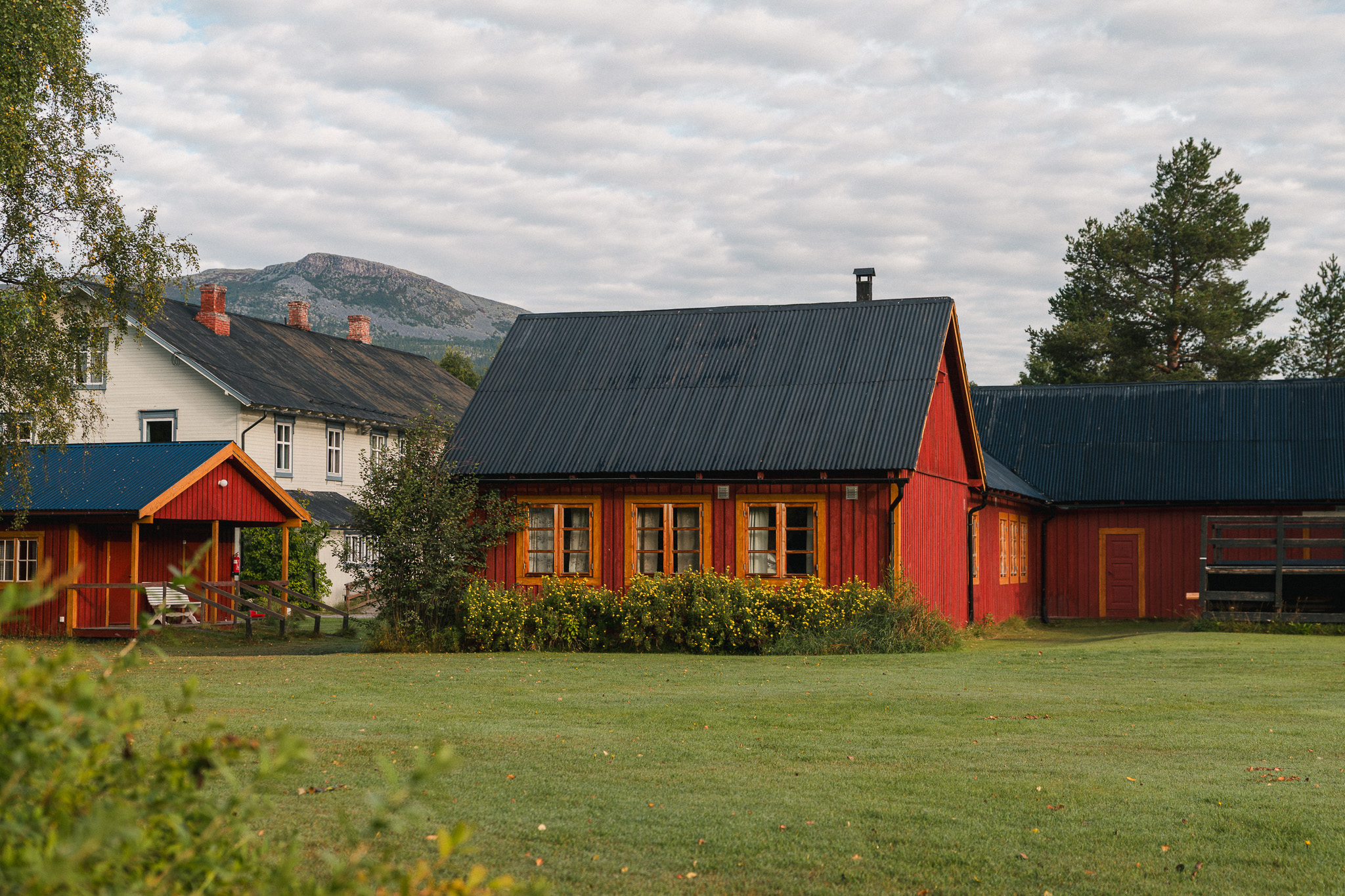
The grass is cut. The houses are looked after. An area has been cleared. A building has been painted. A bench is standing exactly where it should.
Small signs that someone has decided this place is worth taking care of.
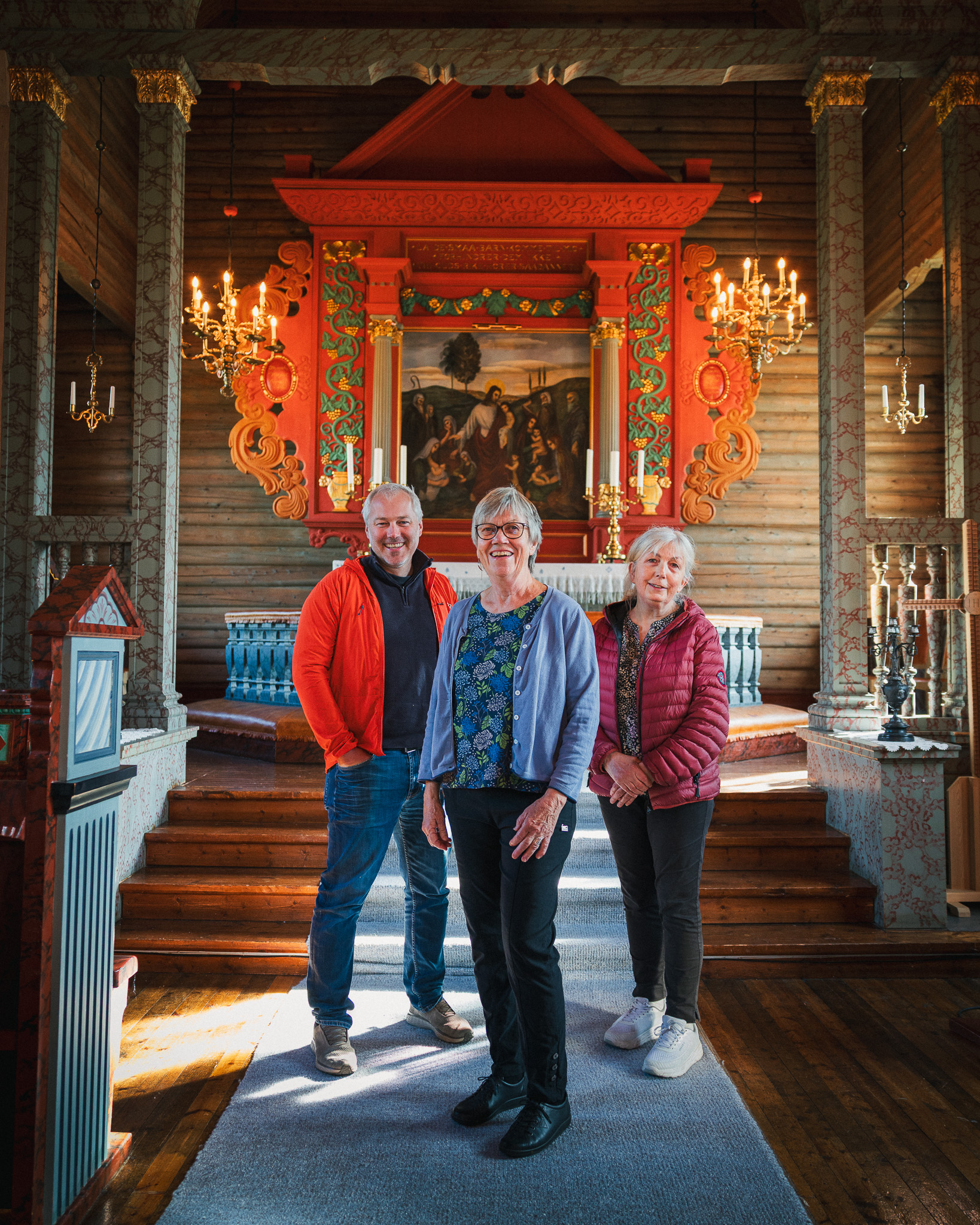
We came to Hanestad ahead of the 100th anniversary of Hanestad Church. It would have been easy to start with the church. It stands at the centre of the story, a hundred years old and still in use.
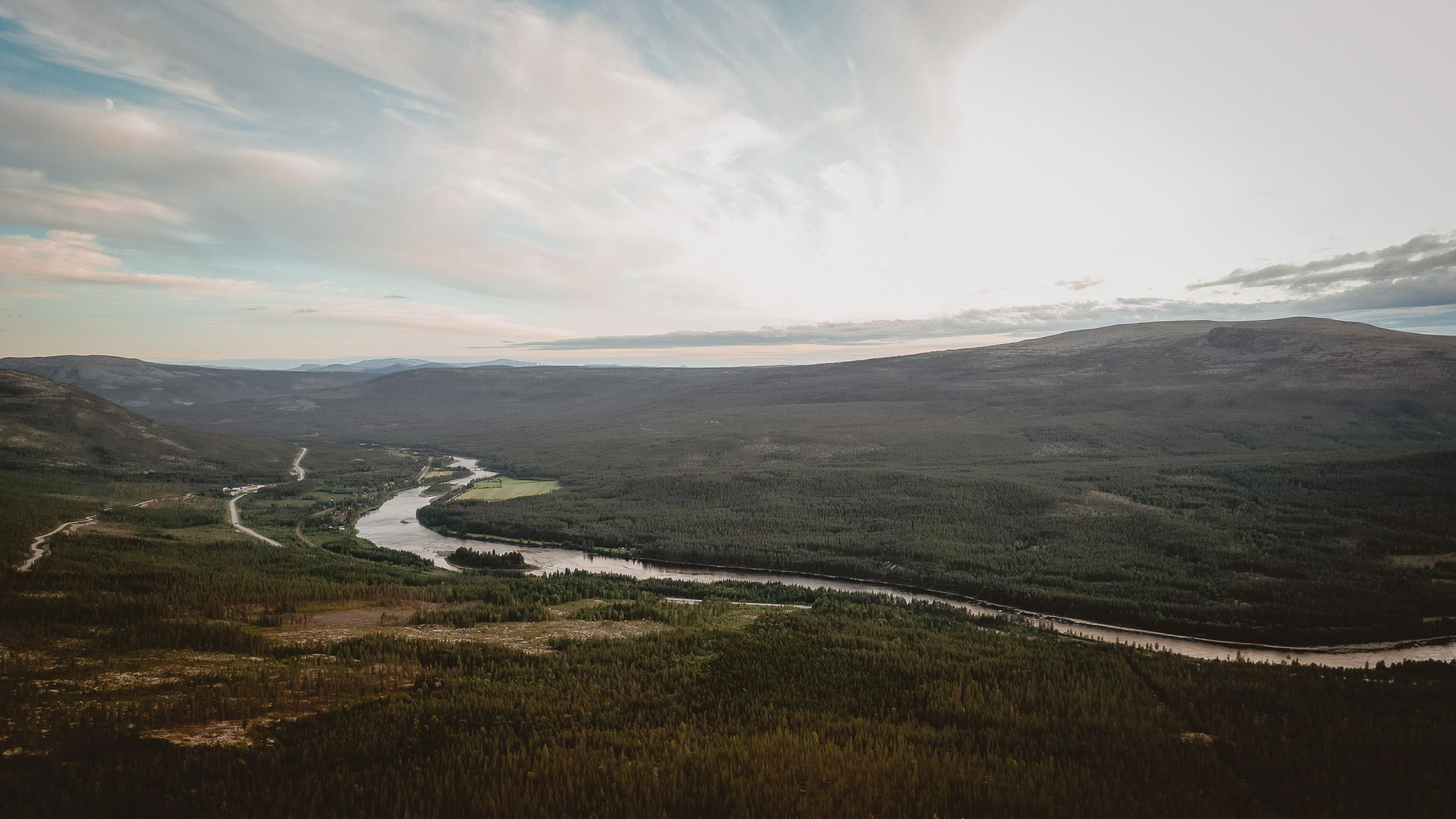
But gradually it became clear that the story of Hanestad is about something larger than a church. It is about a place shaped by the river, the railway, the road, the farms, the fishermen and the people who have chosen to stay.
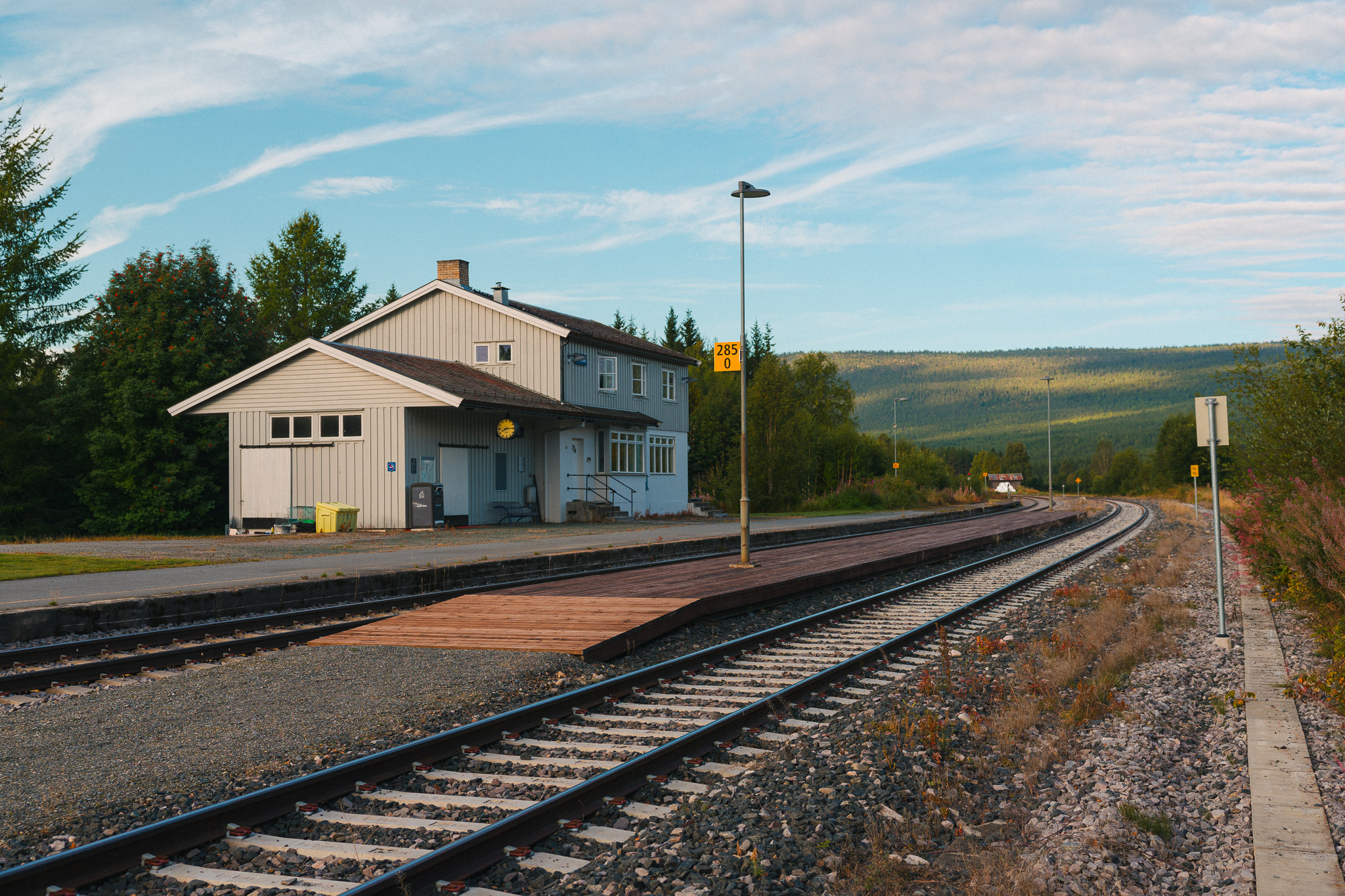
Hanestad lies in a rather distinctive part of Rendalen. On one side, National Road 3 runs through the landscape. On the other is the Røros Railway. Between them, the Glomma moves through the valley. The railway reached Hanestad in 1877. Almost 150 years later, trains still stop here.
It is a strange thought when you stand on the platform.
A train arrives from the north or south, stops for a few minutes and disappears again. To someone passing through, it is simply a railway stop.
For Hanestad, the railway is part of the story of how the village came to be. It connected people and goods with the rest of the country. National Road 3 does much the same today, just in a different way.
And between them lies the village.
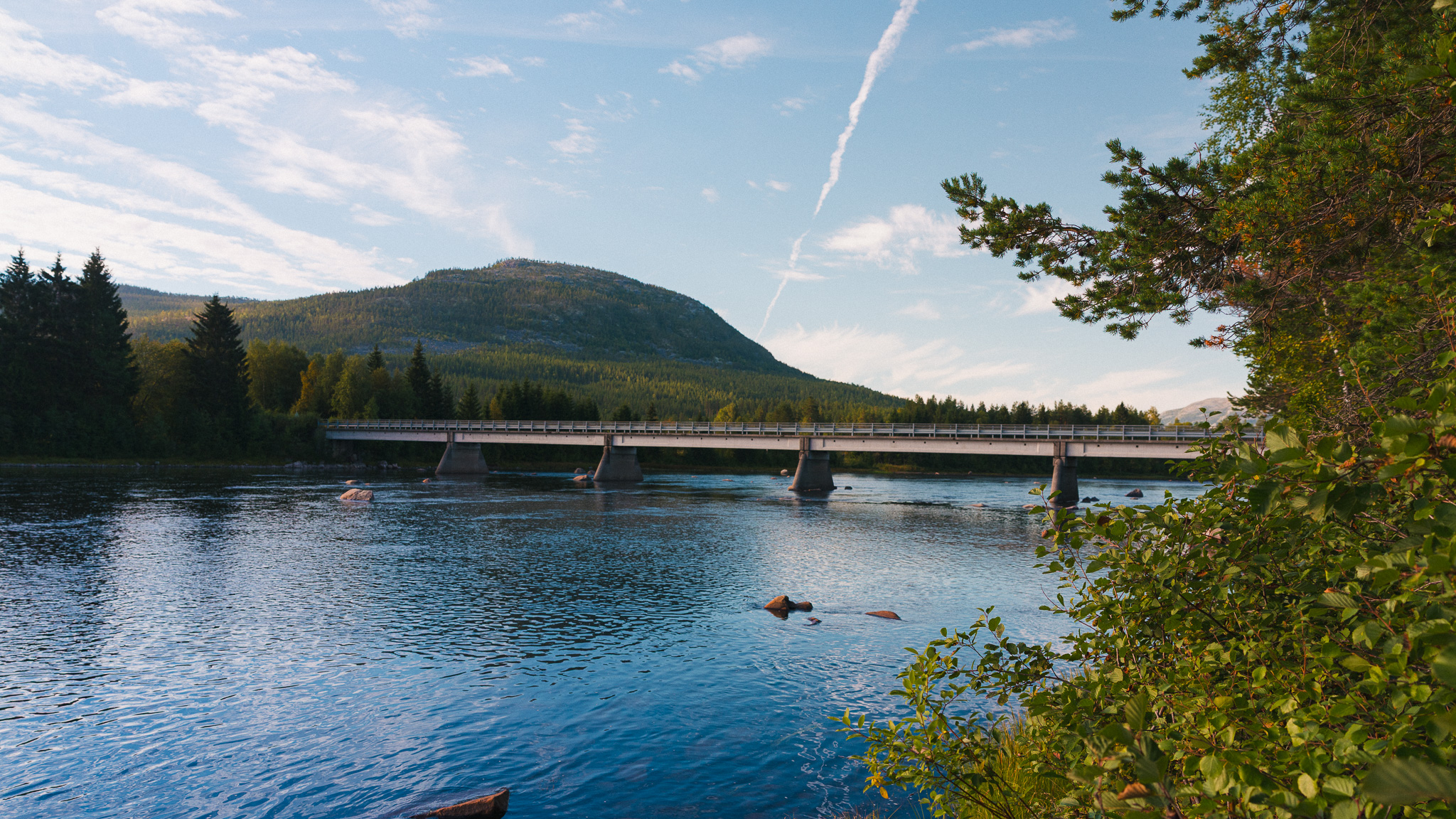
And then there is the Glomma.
The river gives the landscape another sense of scale. It flows past Hanestad in a constant movement – water continuing onwards while houses, farms, roads and railway tracks sit around it.
For many who know Hanestad, the Glomma is also connected to fishing. Hanestad and the Atna area have for many years been known as places where anglers come to try their luck. Some return year after year.
The fishermen have their places. They know the river. They know where to go, where to stand and when it is worth being out there. Some come from Sweden. It is a form of tourism that is not necessarily very visible.
No coachloads. No long list of attractions. Just people returning to the same river, summer after summer.
In Hanestad, people tell stories of fishermen who spend large parts of the summer along the Glomma. It says something about what a place can mean.
You do not have to live somewhere all year to feel connected to it.
For many people, Hanestad is something they see through a car window.
National Road 3 runs through the area. Beside the road is Hanestad Vertshus, a natural place to stop for travellers passing through Østerdalen. But the road only tells part of the story.
Behind it are farms, forests, the Glomma, the railway, the church and a local community that is not as visible from the driver's seat. That is the difference between passing through a place and actually being there.
In Hanestad, that difference becomes quite clear.
In small communities, there is a kind of work that is rarely recorded anywhere.
Voluntary work.
Someone cuts the grass. Someone clears things up. Someone repairs something. Someone paints. Someone takes care of the practical details before people arrive. And then there are those who put the coffee on. The last part may be just as important as the first.
Because voluntary work in Hanestad does not seem to be only about getting things done. It is also about being together. When people meet to do something, there is usually time for a conversation. Someone brings food. Someone stays a little longer than planned. The work becomes a social gathering.
It is difficult to measure, but easy to see when you are there.
People with holiday homes are part of this picture too. People who do not live in Hanestad all year, but who return and take part when needed. On Facebook, Hanestads venner brings together people with a connection to the place.
A local community does not always consist only of those whose mailbox is there. In some places, it also consists of those who keep coming back.
Hanestad is not necessarily a place you travel to in order to tick off a long list. It is more a place where several smaller stories lie close together.
Tegningfallet is located at Hanestad, where the Tegninga river plunges through the landscape and creates a dramatic break in the forests, fields and river landscape.
Further away lies Jutulhogget, the dramatic canyon landscape on the border between Rendalen and Alvdal. Along the Glomma there is also fishing, with one of Østerdalen's best-known rivers for angling. In this way, Hanestad also becomes a gateway to the surrounding landscape. A place to stop before continuing your journey.
Or a place to spend a little more time than you first planned.
Nearby is Camp Bjøntegård, a summer camp school.
Children and young people come here for camps and experience the landscape around Hanestad. The place is also an example of how people from outside the village have developed a connection to it.
It is easy to think of a small village as something closed. Hanestad is not necessarily that.
The road brings people through. The railway brings people past. The Glomma draws fishermen. Bjøntegård draws children and young people. And through all of this, encounters happen between people who might otherwise never have had a reason to come here.
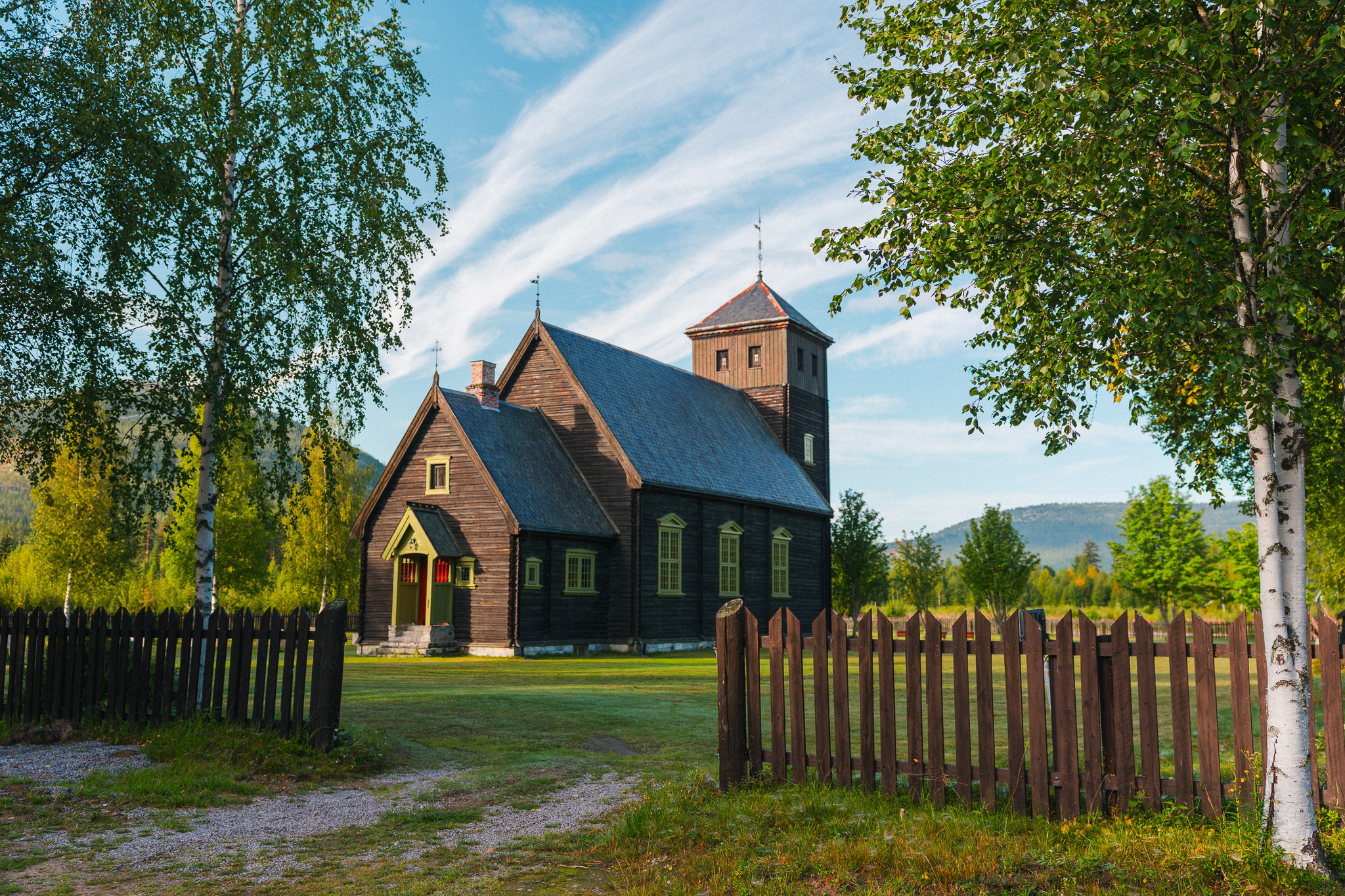
And then there is Hanestad Church.
It was built and consecrated in 1926 and designed by architect Carl Berner. The church is a wooden church with a remarkably well-preserved interior.
In 2026, it turns one hundred years old.
A building can easily be reduced to a year, an architect and a style of construction. But a church is also the sum of the people who have used it.
Baptisms. Confirmations. Weddings. Funerals. Christmas Eve. Ordinary Sundays.
People who have walked through the doors with completely different lives, but with the same room around them. In that way, the history of the church is also the history of Hanestad.
A hundred years is a long time for a building. But it is also a short time in the life of a local community. Behind those hundred years are the generations who built, used and cared for the place.
The church is also connected to people who make the past visible in the present.
Builder Kristoffer Brendhagen and painter Lars Berger are connected to the history of the church.
During the centenary celebrations, photographer Roger Brendhagen also becomes part of this story. He is related to people who were involved in the creation of the church and will present a photography exhibition at Kivatun community hall as part of the centenary celebrations.
There is something typical of small places in this.
History does not necessarily sit behind glass.
It continues through families, buildings, names and people.
Sometimes it appears again in a completely different form.
Kivatun community hall is another place that helps Hanestad continue to function as a local community.
A community hall is, in itself, simply a building. Its significance lies in what happens there.
Meetings. Celebrations. Voluntary work. Events. Conversations. People who might otherwise never have met.
During the centenary weekend in September 2026, Kivatun will once again be filled with life.
Roger Brendhagen's photography exhibition opens on 5 September, while Hanestad Church will be celebrated with a centenary service and celebration on 6 September. The events are part of Veidekulturfestivalen 2026.
But when the centenary is over, Kivatun will still be there. And perhaps that is exactly the point.
There are many ways to describe a place. You can start with the map. With the river. With the mountains. With the road. With the railway. With history.
All of these things tell us something about Hanestad. But after walking around the village and talking to the people there, it becomes difficult to get around one thing.
It is the people who make the place.
The people who cut the grass. Those who clear things up. Those who turn up. Those who cook. Those who take care of buildings. Those who return for voluntary work even though they do not live here all year. Those who know the fishermen who come back summer after summer. Those who remember who lived where. Those who know what happened before. And those who still discuss what should happen next. It is not necessarily what you see when you drive through Hanestad.
But perhaps that is what makes it worth stopping.
In September 2026, Hanestad Church will be celebrated.
There will be a church service, a centenary celebration, a photography exhibition and people gathering once again.
But really, the anniversary is about something larger than a date. It is about continuity. About someone taking care of a building for a hundred years. About someone still cutting the grass. About people still turning up. About people still returning to the river. And about a small village that still has people who care about what happens to it.
Hanestad still lies between the road, the railway and the Glomma. The trains come and go. The river continues south. Cars pass through. The fishermen return.
And in Hanestad, people continue to take care of their place.
Hanestad at a glance
Hanestad
A village in Rendalen, beside the Glomma and the Røros Railway.
Røros Railway
The railway reached Hanestad in 1877. Hanestad station is located along the Røros Railway.
Hanestad Church
Built and consecrated in 1926. Designed by Carl Berner. The wooden church's interior is remarkably well preserved.
The Glomma
Norway's longest river flows past Hanestad and has for many years been important for sport fishing in the area.
Nearby
Tegningfallet and Jutulhogget are among the natural and landscape experiences in the surrounding area.
Local meeting places
Kivatun community hall and Hanestad Vertshus are two places that still play a role in the village.
Current · 2026
Hanestad Church turns 100 in 2026.
The centenary is celebrated on 6 September 2026 as part of Veidekulturfestivalen 2026.
11.00
Centenary service at Hanestad Church with Bishop Ole Kristian Bonden.
12.00–15.00
Centenary celebration at Kivatun community hall.
5 September
Roger Brendhagen presents a photography exhibition at Kivatun.
The centenary is a timely reason to visit Hanestad, but the story of the village began long before 2026 – and continues long after the celebrations are over.
Explore the area

©Opplev Rendalen 2026. All Rights Reserved